Physical Science
Physical Science
The Solano Community College Physical Science program gives students the opportunity to explore Physics, Chemistry, Astronomy, and Geology while developing the skills of scientific inquiry and critical thinking.
With an emphasis on understanding Earth’s climate and the challenges of Climate Change, the program prepares students to become informed global citizens and opens doors to further study and career opportunities in the sciences.
Discover the science behind our world—and shape a sustainable future.
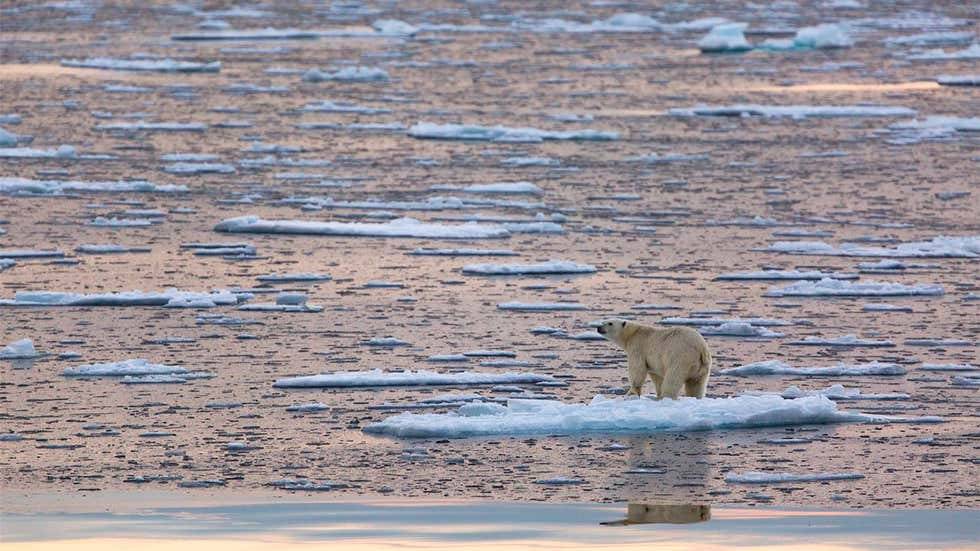
Polar bear on a melting ice floe off the coast of Norway.
To learn more about the climate change crisis, and how we can mitigate it, please sign up for the following courses:
PHSC 013: Weather and Climate
PHSC 014: Atmospheric Science Laboratory
PHSC 015: Global Climate Change
PHSC 016: Natural Disasters
You can find more details about our Physical Science A.S. degree, below.
The Physical Science program at Solano Community College provides students with the opportunity to explore the methods of scientific inquiry and build a strong foundation in disciplines such as Physics, Chemistry, Astronomy, and Geology. Students may focus on areas that align with their personal interests while developing the skills needed to analyze and understand the natural world.
A key component of the program is the study of climate science, which equips students with the knowledge to understand the factors influencing Earth’s climate and the global challenges of Climate Change. Along the way, students strengthen critical thinking, scientific communication, and problem-solving skills. Upon completion, graduates will be well-prepared to pursue further academic study or explore diverse science-related career pathways.
-
Associate in Science in Physical Science
-
A two-year A.S. degree requiring completion of a 34-unit Physical Science major, Solano’s general education requirements, and additional electives to reach a total of 60 units. All major courses must be completed with a minimum grade of C (or P if taken Pass/No Pass) .
-
-
Laboratory Technician / Chemist’s Assistant
Support lab operations, conduct experiments, and handle data in scientific environments. Typical pay for chemical technicians is around $57,790 annually.
-
Research Technician / Field Technician
Assist with scientific research or field studies in disciplines like environmental science, geology, or astronomy.
-
Environmental or Geological Technician
Monitor ecosystems, collect data in the field, or help with geological surveys.
-
Surveyor or Cartographic Aide
Measure and map physical terrain—useful for planning, construction, and land management.
-
Quality Control Technician
Test materials and processes in manufacturing or industrial labs to maintain product standards.
-
Geospatial or Data Technician
Work with spatial data for mapping, analytics, or geoscience applications.
-
Science Educator or Lab Assistant
Support teaching and hands-on learning in academic or outreach settings.
-
Entry-level Industry Technicians
Roles such as engineering technician, technical operations assistant, or support staff in aerospace, energy, and manufacturing.